

Document Resources
Everything you need to know about gathering the documents that strengthen your lemon law claim.
Required Documents
Proper documentation is the foundation of every successful lemon law claim. Without it, the process may be harder and may produce lesser results. Having the right documents ensures a stronger case and quicker resolution. Even if you're unsure of your vehicle's issues, we recommend gathering all relevant paperwork and submitting it as soon as possible. This ensures our attorneys can evaluate your situation quickly and thoroughly. Having all of these essential documents ready before beginning the claims process will save time and effort.
Vehicle Purchase or Lease Agreement
- •A document with the heading "Vehicle Purchase Agreement" or "Retail Installment Sales Contract" (for purchases), or "Lease Agreement" (for leases).
- •It's printed on standard letter-sized paper.
- •Contains vehicle details (make, model, VIN).
- •Financial terms (purchase price, interest rate, monthly payment).
- •Signatures of all "Buyers".
- •The document may also include warranty information or disclaimers from the dealership.
- •Includes sale/purchase date, Vehicle Plate/ID info, and vehicle condition at time of sale.
- •PROOF OF LOSS/ POSSESSION.
Repair Order Invoices
- •A multi-page document or receipt from the dealership or mechanic's shop.
- •Includes the dealership's name, address, and phone number ("shop header").
- •Vehicle details (make, model, VIN, license plate number).
- •Contains a list of repairs and services performed, including a description of repair performed, as well as the technician's comments.
- •Mileage in and out, and additional mileage for test drives.
- •Repair line type or complaint listed at the top or bottom of the report.
- •An invoice or "Total Cost" listed at the bottom of the document.
- •Warranty or out-of-pocket indicator — whether the work was done under warranty "Customer" or "Warranty" status.
- •In and Out Date/ Warranty.
Driver's License / ID
- •A government-issued ID or Driver's License issued by the State DMV.
- •Features your Photo, Full name, date of birth, and address.
- •Driver's license or ID number.
- •Barcode or magnetic strip on the back.
- •Issued by your state's Department of Motor Vehicles (DMV).
Vehicle Registration Card
- •A registration card or letter issued by your state's DMV.
- •Current sticker or label on your vehicle's license plate.
- •Contains vehicle details (make, year, VIN, license plate number).
- •Registration expiration date.
- •State seal or logo.
Choose Your Document Type
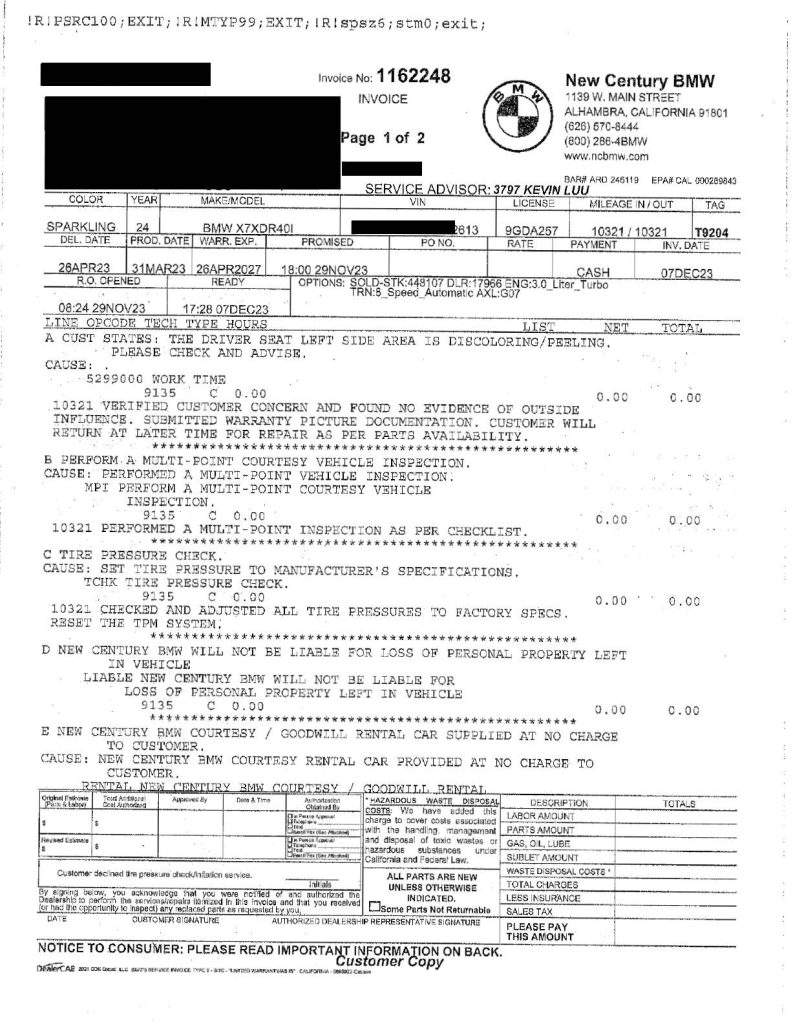
Document Guide
What is a Dealership Repair Order Invoice?
A dealership repair order invoice is a document provided by a dealership or authorized service center after maintenance or repairs have been performed on a vehicle. It serves as a detailed record of the services rendered, parts replaced, and associated costs.
Why is it Important? — Read the FAQs below.
Repair Order Invoice
Physical Description of the Document
Standard letter-sized paper (8.5" × 11"). May be multi-page if extensive repairs were performed. Some shops use receipt-sized thermal paper for smaller jobs.
Shop or dealership name, address, phone number, and logo. Document title: "Repair Invoice," "Final Repair Order," or similar.
Key Identifiers of the Document
A unique repair order or invoice number that links the document to the repair record.
The date the vehicle was picked up and repairs were completed.
Make, model, year, VIN, and license plate number. Mileage at the time of pick-up.
Comprehensive list of all completed services (e.g., "Replaced brake pads," "Oil change"). Diagnostic results and repairs made to address reported issues. Itemized breakdown of parts used (part names, numbers, and costs). Labor costs, often listed as hourly rates multiplied by time spent.
Your name and contact information, as well as vehicle details (make, model, VIN, mileage).
Subtotals for parts, labor, and taxes. Discounts or promotions applied (if any). Total amount due or paid, with payment method noted.
Coverage on parts or labor (e.g., "12 months/12,000 miles warranty on brake pads"). Terms of follow-up service if the issue recurs.
Space for the customer's signature to confirm pick-up and satisfaction with the completed work. Technician or service advisor's signature may also appear.
Why Might Your Lawyer Need It?
In disputes involving vehicle defects, warranties, or repair quality, the repair order invoice is critical to demonstrate the timeline and scope of repairs, whether the dealership or manufacturer upheld their obligations, and any recurring issues or failed attempts to repair the vehicle.
Shows whether repairs were covered under warranty or if out-of-pocket payments were made. Indicates whether the vehicle was serviced at an authorized dealership, which may be required for certain warranty claims, to determine whether the dealership or manufacturer upheld warranty obligations.
Provides a chronological history of vehicle upkeep, which can be useful for resale, insurance claims, or determining patterns of defects.
If the dealership misrepresented repair work or charged for unnecessary services.
To calculate financial losses for reimbursement or damages in a lawsuit.
To show recurring problems with a vehicle or a lack of resolution despite multiple visits.
Conclusion
A dealership repair order invoice is not just a receipt—it's a comprehensive record of your vehicle's service history and an essential piece of evidence in legal matters involving vehicle repairs or defects. To ensure your lawyer can analyze your case effectively, locate and organize all repair order invoices related to your vehicle.
How To Obtain
How to Obtain Your Documents
Tips When Requesting These Documents:
Purchase or Lease Agreement, Repair Order Invoices, Vehicle Registration Card, Driver's License or Identification Card
Check the paperwork provided when you signed the lease. It's typically included in a folder or envelope from the dealership or leasing company.
WHAT IT LOOKS LIKE:
• Typically printed on standard letter-sized paper.
• Includes headings like "Vehicle Purchase Agreement" or "Retail Installment Sales Contract" (for purchases) or "Lease Agreement" (for leases).
CONTAINS:
• Vehicle details (make, model, VIN).
• Financial terms (purchase price, interest rate, monthly payment).
• Signatures of all "Buyers".
WHERE TO LOOK:
• Purchase Folder: Check any folder or envelope given to you by the dealership when you bought or leased the vehicle.
• Personal Files: Look in a file cabinet or box where you keep financial or vehicle-related documents.
• Home Office or Desk Drawer: If you store important documents near your work area at home, check there.
WHAT IT LOOKS LIKE:
• A small, wallet-sized plastic card issued by your state's Department of Motor Vehicles (DMV).
FEATURES YOUR:
• Photo.
• Full name, date of birth, and address.
• Driver's license or ID number.
• Expiration date.
• Often includes a barcode or magnetic strip on the back.
WHERE TO LOOK:
• Wallet or Purse: Most people keep their ID in their wallet or purse.
• Home Storage: If you have a backup ID or recently renewed your license, check drawers or files where you store personal identification items.
• Vehicle: Some people keep copies of IDs in their glove compartment.
WHAT IT LOOKS LIKE:
• Usually a multi-page document or receipt from the dealership or mechanic's shop.
INCLUDES:
• Repair shop's name, address, and phone number.
• Vehicle details (make, model, VIN, license plate number).
• A list of services performed (e.g., oil change, part replacements) as well as the technician's comments.
• Costs and payment details.
WHERE TO LOOK:
• Glove Compartment: Many people keep recent repair invoices in their car for quick reference.
• Home Files: Check folders labeled "Car Maintenance" or similar in your personal filing system.
• Email: If you've received digital copies or confirmations from the repair shop, search your email using keywords like the shop's name, "invoice," or "repair order."
WHAT IT LOOKS LIKE:
• A small card or letter issued by your state's DMV.
INCLUDES:
• Your name and address.
• Vehicle details (make, year, VIN, license plate number).
• Registration expiration date.
• State seal or logo.
WHERE TO LOOK:
• Glove Compartment: This is the most common place to keep a vehicle registration card, as it's required during traffic stops.
• Home Files: Check where you keep DMV documents or vehicle-related paperwork.
• Email: Some states issue digital copies or confirmations of vehicle registration. Search your inbox with terms like "DMV" or "vehicle registration."
Stay Organized
Tips for Organizing and Locating Documents
CREATE A DEDICATED FOLDER— Buy a physical or digital folder and label it "Lemon Law Case" or "Vehicle Records." Keep all documents organized in one place to make them easy to find when needed.
SEARCH YOUR EMAIL— For more recent purchases, emails and other digital copies of your records may be available. Search keywords like "invoice," "receipt," "purchase agreement," "lease," and the name of the dealership or lender.
UTILIZE TECHNOLOGY— If you have lost any physical documents or if they're hard to locate, consider using apps like CamScanner or Adobe Scan to digitize any documents you find. Store them on cloud platforms (e.g., Google Drive, Dropbox, iCloud) for easy access and safekeeping.
CHECK YOUR GLOVE COMPARTMENT— Inside your vehicle, it is common to find documents such as your vehicle registration, insurance card, and repair receipts. Many people store important documents in their car, so it's always worth checking.
By knowing what you're looking for and organizing your search, you'll be able to find the necessary documents faster and ensure your lawyer has everything they need for your case. Once found, share these documents with your lawyer right away for a prompt review. If you have any questions, don't hesitate to reach out to our team directly at TOLL FREE.

Ready to Submit Your Documents?
Securely upload your repair orders, purchase agreement, and ID through your Client Portal — or reach out to our team and we'll personally walk you through the next steps.